How to choose a CV format that fits your experience
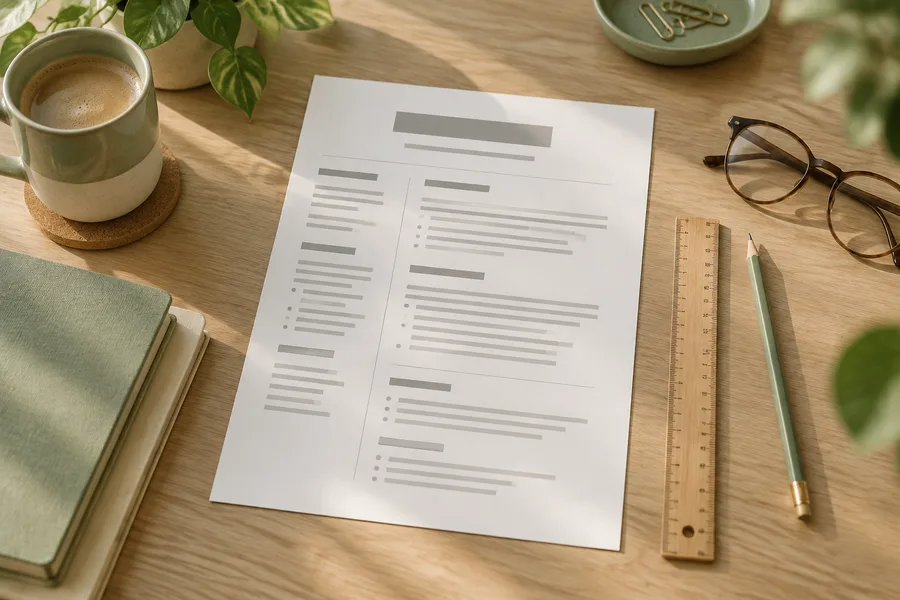
Compare chronological, skills-based and combination formats, then choose a structure that keeps your evidence and work history clear.
Read the guide ↗
 CVPebble

Topic
Layout, length and proofreading are where small mistakes cost the most. These guides cover CV format: how to choose one, how long a CV should be, which words to cut, a PDF checklist and the mistakes people repeat.
Compare chronological, skills-based and combination formats, then choose a structure that keeps your evidence and work history clear.
Read the guide ↗Choose length from the employer's instructions and your relevant evidence, then cut repetition without shrinking readability.
Read the guide ↗Check the saved document, not only the editor preview.
Read the guide ↗A practical editing guide to replace vague claims, crowded layouts and avoidable application errors with useful evidence.
Read the guide ↗A short companion to our video: four fillers that pad a CV, and the simple swaps that make every line earn its place.
Read the guide ↗Keep one date format, list your newest role first, and do not hide a gap: a short honest note beats an unexplained hole in your CV.
Read the guide ↗Choose a clear file name for your CV or resume: use your name, keep it short, skip version numbers and send a PDF. Examples and mistakes to avoid.
Read the guide ↗Reading your CV or resume out loud catches typos and awkward lines your eyes skip. A simple method, plus what to check before you send it.
Read the guide ↗A hiring manager may open your CV or resume on a phone. A two-minute check for small text, cut-off lines and broken layout before you apply.
Read the guide ↗Plain and readable beats clever. Here is a simple setup that works.
Read the guide ↗A link is only useful if the profile behind it is ready.
Read the guide ↗Understand and start Write each section Tailor your CV to a job Countries and privacy Beyond the CV