 CVPebble
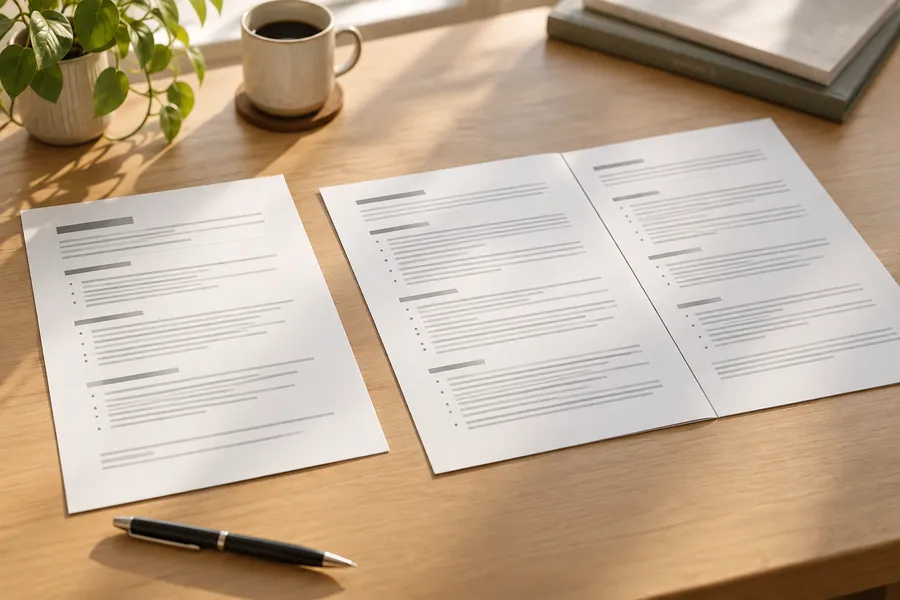
A one-page CV can be enough for a student or a first job. Two pages can make more sense when several relevant roles need space. Start with the application instructions, then decide how much evidence the reader needs. Page count is a result of that choice, not a score.
This guide accompanies our short video on YouTube.
Start with the employer and the market
LSE Careers explains that expectations differ by country, industry and career stage. Its 2019 article gives examples of both one-page and two-page conventions; those examples are not current rules for every employer. If an employer gives a limit, follow it. If the process is unclear, look for its own application guidance.
When one page is enough
Consider one page when your studies, projects and relevant activities fit comfortably without losing useful details. This often suits a first job or an early-career application. Keep the strongest evidence rather than adding a second page simply to look more experienced. A short CV should still explain what you actually did.
When a second page earns its place
Consider two pages when a second page holds relevant evidence that would otherwise be lost: recent roles, selected projects or qualifications the vacancy asks for. Prospects recommends a concise CV and describes two A4 pages as a common guideline, with exceptions. Do not turn that guideline into a universal cap: academic, research, medical and some senior applications may ask for a different document.
Edit the content before the typography
Remove repeated duties, generic adjectives and unrelated detail before reducing the font. Summarise older work where appropriate rather than deleting dates to conceal your history. Keep a qualification, skill or achievement when it helps answer this vacancy. Do not invent numbers or outcomes to make a short entry look stronger.
Check the actual final file
Use the same readable text size and spacing across both pages. Put the most relevant evidence early, not all of it on page two. Preview the actual exported document: a heading stranded at the bottom, a large empty area or one trailing line can mean an editing or page-break problem rather than a need for a whole extra page.
A quick one-page or two-page decision
- Check the stated page limit and required file type.
- Mark each section that directly supports this role.
- Remove repetition and shorten weak entries.
- Keep one page if the remaining text fits comfortably. Use two if the extra page carries useful evidence.
- Open the final file and read both pages at a normal size. Follow the employer’s instructions if they differ.
For example, a first-job applicant might use one page for education, a school project and volunteer work. An experienced applicant might need a second page for recent relevant roles. These are editing examples, not rules based on age or years worked.
For a related editing decision, see how to choose a CV format. For a first application, start with the no-experience guide.
Choose a CV format · Write a CV with no experience
Frequently asked questions
Is a two-page CV unprofessional?
No. What matters is whether the second page contains useful evidence and fits the application’s expectations.
Should a student always use one page?
Not always. One page is a useful starting point, but a requested academic CV or substantial relevant evidence may need a different length.
Can I shrink the text to fit one page?
Edit first. A shorter document is not better if the reader has to zoom in to understand it.
Sources and scope
This guide uses UK career-advice sources for general editing principles, not a worldwide page-count rule. Reviewed 29 October 2026. Local practice and the employer’s instructions take priority. No interview, hiring or ATS result is guaranteed.